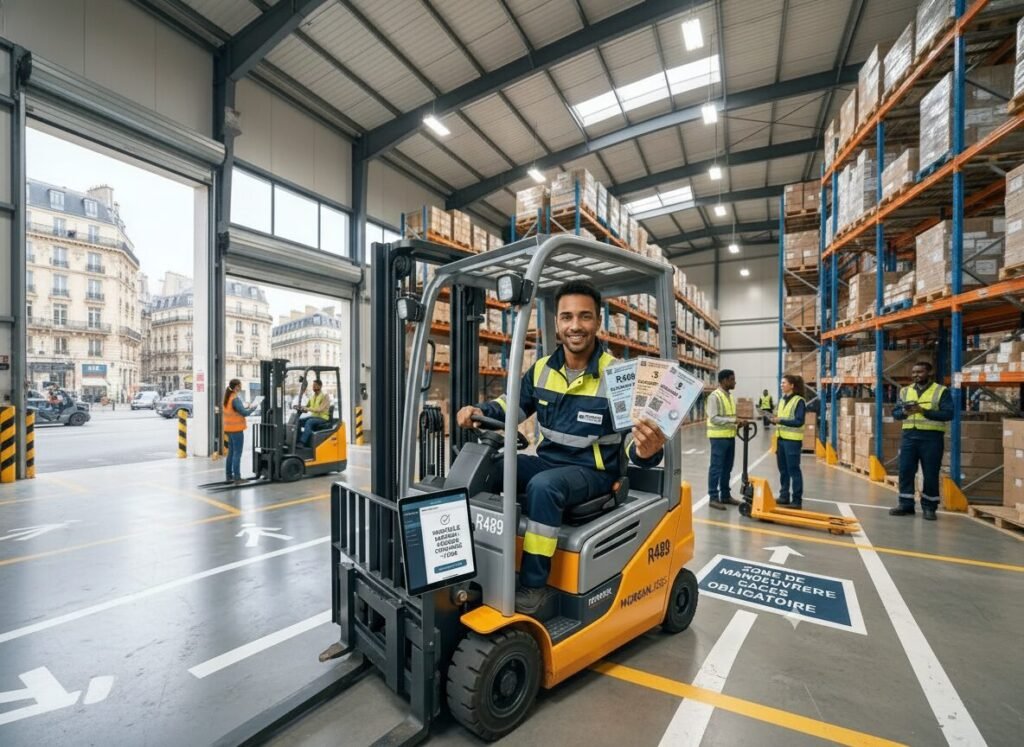
Why forklift operators matter
Forklift operators, or caristes, are the unsung heroes of logistics and manufacturing. They load and unload goods, move pallets, feed production lines and ensure stock is stored safely. As e‑commerce booms and supply chains become more complex, demand for skilled caristes remains high[21]. Many French cities—especially logistics hubs like Lyon and Lille—rely on forklift operators to keep goods moving[11].
CACES certification – what you need to know
Operating a forklift in France requires a Certificat d’Aptitude à la Conduite en Sécurité (CACES). Since January 2020, the R489 standard replaced R389 and includes nine categories. Key categories for logistics are:
- Category 1A/1B (low‑lift pallet trucks and stackers). These vehicles are used for horizontal transport and order picking in supermarkets and warehouses. Category 1A covers low‑lift pallet trucks (≤1.20 m lift) and is ideal for short distances; Category 1B covers stackers designed for higher lifts[23]. Training lasts 2–5 days and includes safety, regulations and practical manoeuvres. Employers prefer candidates with a 1B certificate because it is more versatile[24].
- Category 3 (front‑loading forklift). This versatile forklift handles heavy loads up to 6 tonnes. It is used in warehouses, construction sites and distribution centres[25][26]. Obtaining a Category 3 certificate (sometimes called the Fenwick licence) greatly enhances employability[27].
- Category 5 (reach truck). Designed for narrow aisles and high‑rise storage, this specialised forklift maximises warehouse space[25]. Operators require precision and additional training.
Certification validity and employer obligations. CACES certificates are valid for five years and must be renewed via a refresher course[28]. While the law does not mandate CACES for employees, employers are legally obligated to provide safety training and ensure operators are competent[29]. Without certification, accessing forklift jobs is almost impossible.
Salary ranges for forklift operators
Forklift operators’ pay depends on experience, location, sector and contract type. According to Staffmatch, salary ranges in 2025‑2026 are:
- Beginners (CACES‑certified): €1 801.80–€1 950 gross per month[30].
- Experienced operators: €1 950–€2 300+[31].
- Senior specialists (multiple certificates, heavy load or cold storage): €2 300–€2 600+[31].
Interim contracts usually include end‑of‑assignment bonuses and paid‑leave indemnities, which can add 15–20 % to monthly earnings. Additional premiums apply for night shifts or working in cold storage.
Job prospects and career progression
- High demand sectors. Logistics and distribution are the largest employers of forklift operators[21]. Retail warehouses, manufacturing plants and construction sites also require caristes. The growth of e‑commerce and rapid delivery services ensures continued demand. Cities like Lyon, Lille and Rennes are particularly dynamic for logistics roles[32].
- Varied career paths. With experience and additional CACES categories, forklift operators can advance to team leader roles, logistics coordinators or warehouse supervisors. Category 3 certificates are especially valued because they cover multiple environments[33].
- Training opportunities. Many employers finance CACES training for promising employees. Some digital staffing platforms offer training partnerships and guide candidates through certification.[10].
Tips for candidates
- Keep certifications up to date. Renew your CACES before it expires and consider obtaining multiple categories (1B, 3, 5) to broaden your job prospects.
- Focus on safety and precision. Employers look for operators with clean safety records and a strong understanding of load balance and warehouse rules.
- Develop soft skills. Communication, punctuality and teamwork are critical in fast‑paced logistics environments. Reliable operators receive repeat assignments and can negotiate better pay.
- Use digital platforms. Create profiles on digital staffing platforms to access a wide range of job offers and store your certifications securely[10].
Tips for employers
- Benchmark compensation. Offer salaries within the market ranges and include premiums for night work or specialised environments[30][31].
- Invest in training. Even certified operators need company‑specific training. Provide refresher courses and emphasise safe practices. Encourage employees to obtain higher CACES categories.
- Plan for peak periods. Anticipate seasonal spikes (holiday retail, harvest season) and recruit early. Digital platforms can help you quickly source certified operators[6].
- Monitor performance. Track attendance, productivity and safety incidents. Reward reliable operators with longer assignments or better pay. Use feedback mechanisms on digital platforms to build trusted pools of operators.
- Ensure compliance. Maintain up‑to‑date documentation for all operators and store contracts and payslips in secure vaults[8].
Conclusion
Forklift operators are indispensable in France’s logistics and industrial sectors. With valid CACES certification, clear safety practices and a proactive approach to training, caristes enjoy solid job prospects and career progression. For employers, investing in safety, competitive compensation and digital tools ensures a reliable workforce and smooth supply chain operations.
FAQ
What is CACES and why is it important? CACES (Certificat d’Aptitude à la Conduite en Sécurité) is a certification proving competence to operate handling equipment. For forklifts, categories 1, 3 and 5 cover pallet trucks, front‑loading forklifts and reach trucks[25]. Employers must ensure operators are properly trained[29].
How long is a CACES certificate valid? Certificates are valid for five years; operators must take refresher training to renew them[28].
Can I become a forklift operator without prior experience? Yes. Beginners can obtain a CACES in a few days and start in entry‑level roles. Operators with multiple categories and good safety records quickly progress to higher pay brackets and supervisory roles[30][31].
Conclusion and call to action
Forklift operators are indispensable to logistics and manufacturing. With a valid CACES, strong safety practices and soft skills, caristes enjoy solid job prospects and career progression. For employers, investing in training, competitive pay and digital tools ensures smooth operations. Interested in becoming or hiring a certified forklift operator? Sign up with Morgan to browse current openings or source qualified caristes quickly.